
Subq injection: where and how to inject peptides
FDA drug labels walk you through the places and the method for giving a subcutaneous shot just under the skin.
- injection areas listed on the label
- Belly, thigh or upper arm
- a different spot for each dose
- Rotate
A subq injection is a subcutaneous shot placed just under the skin in the fat layer rather than deep in the muscle. For medications such as Zepbound and Egrifta SV, FDA labels describe the exact body areas and syringe steps needed for safe home shots. Your prescriber makes all dose decisions and sets your routine; use our peptide dose calculator to change a prescribed dose into units on a syringe.
Subcutaneous injection areas: belly, thigh and upper arm
According to the Zepbound FDA label, you can inject under the skin in your thigh or abdomen, which is your belly. You can also have another person give you the injection in the back of your upper arm.
Injecting in your belly? Stay at least 2 inches from your belly button, per the Vyleesi FDA label. For a complete look at the spots you can inject in the belly area, the thigh and the arm, see our tirzepatide injection guide.
Rotating between sub q injection sites
The Zepbound label tells you to change injection sites with every dose, even if you stay in the same general body area. By moving spots, you lower your risk of lipodystrophy (small pits or thickened skin) and help prevent hard skin lumps. The Vyleesi label says never to inject into skin that has irritation, soreness, bruising or redness.
Steps for giving a subcutaneous injection
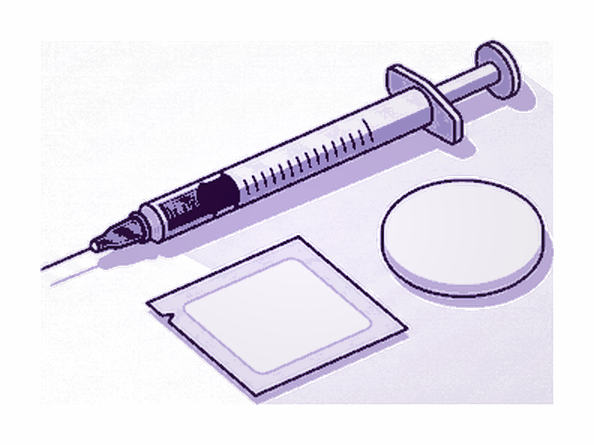
Combined below are patient directions taken from Zepbound and Egrifta SV FDA labels.
- Wash your hands thoroughly with soap and water.
- Wipe the skin spot you picked with an alcohol pad and allow it to air dry.
- At the clean spot, pinch a fold of skin; the Zepbound label says your provider should tell you whether pinching is right for your needle.
- Hold the syringe so it meets the pinched skin at a 90 degree angle, then push the needle in smoothly.
- Move the plunger down slowly and keep going until the syringe holds nothing.
- Take the needle straight out at that same 90 degree angle, then release the skin.
- Put the used syringe and needle in an FDA-cleared sharps container immediately.
Drawing medication from a vial
Follow the Egrifta SV label to fill your syringe, and first learn how to read an insulin syringe.
- With a fresh alcohol pad, clean the rubber stopper that sits on top of the vial.
- Push the needle through the middle of the rubber stopper, then turn both the vial and syringe upside down.
- Leave the needle tip under the liquid, then slowly pull the plunger back until the liquid reaches your dose mark.
- Before you pull the needle out of the vial, check your volume on the barrel's unit lines.
Removing an air bubble from the syringe
The Egrifta SV label explains the steps if you see air inside the barrel with the vial upside down. Gently tap the side of the syringe with your finger to make any air bubbles rise to the top near the needle. Press the plunger up slowly to remove the air until the liquid reaches your dose line.
Peptide needle size and length for a subq injection
A standard U-100 insulin syringe holds 1 mL, equal to 100 units. Gauge choices are 29, 30 and 31; available lengths are 15/64 inch, 5/16 inch and 1/2 inch. A needle's gauge shows how thick it is; a higher number means a thinner needle. See our page about the best syringe for peptides to compare these choices. A subcutaneous injection needle needs to reach only just below the skin, according to Healthline's insulin syringe overview; shorter needles help you avoid hitting muscle.
Questions people often ask
How should you give your first peptide injection?
Ask your pharmacist or the provider who prescribes for you to walk you through your initial dose, either in person or by video. Before you begin, lay out alcohol pads, a vial, a syringe and your sharps container on a clean counter so you don't have to rush.
Does a subq injection hurt?
Healthline notes that a higher gauge number means a thinner needle; a 30 or 31 gauge needle may feel more comfortable. Shorter needles help you keep the injection just under the skin and away from muscle.
Is it okay to use the same spot for every injection?
No. The Zepbound label advises you to change where you inject with each dose. By changing spots each time, you can help prevent lumps, pits or thickened areas on your skin.