
How long does bacteriostatic water last?
CDC rules allow 28 days of use for an opened bacteriostatic water vial, beginning with the 1st puncture of the stopper by a needle. A vial you never opened is good until its printed expiration date.
- CDC: after the first needle
- 28 days
- storage listed on the label
- 68 to 77 degrees F
- final usable date
- Expiration date
Once a needle punctures the rubber stopper, how long does bacteriostatic water last? The answer is 28 days unless the manufacturer states a different limit. Sealed and unopened, the bottle keeps its quality at room temperature through the expiration date shown on the label. Here we break down the 28-day countdown, cover storage for your bottle and show when leftover water should be discarded.
Bac water shelf life: how long does bacteriostatic water last after the first puncture?
Bacteriostatic water is sterile water for injection that contains benzyl alcohol as a preservative. The preservative is at 0.9%, which equals 9 mg in every mL. Thanks to that preservative, the product comes in a multiple-dose vial, a bottle you can draw from more than 1 time when you need to dissolve or dilute drugs.
You must date a multiple-dose vial's label as soon as you open it or puncture it with a needle, per CDC injection safety guidance. Throw the bottle out within 28 days, except where the manufacturer names a different date. Use aseptic technique for every needle entry, including clean, germ-free steps such as wiping the rubber stopper with alcohol.
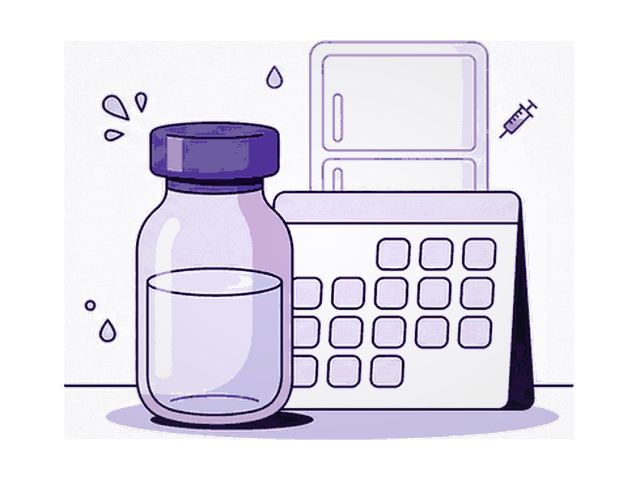
Bacteriostatic water storage: fridge or room temperature
Plenty of beginners question whether the bottle belongs in the refrigerator once it's been opened. The vial belongs at room temperature; the Hospira DailyMed label puts that range at 68 to 77 F, or 20 to 25 C.
Refrigerating the plain water bottle isn't required before your 1st draw or after it. After the water is injected into a powder vial to dissolve medicine, the mixed drug vial follows separate peptide storage guidance and often ends up in the fridge.
28-day rule vs the bacteriostatic water expiration date
Each bottle of bacteriostatic water has 2 dates that you need to distinguish. With the flip-top cap still on and no needle yet through the rubber stopper, go by the expiration date the manufacturer stamps on the bottle.
The expiration date stops governing as soon as a needle punctures the rubber stopper; from that moment the 28-day clock runs. CDC rules require that the 28-day beyond-use period must never go beyond the original expiration date set by the manufacturer. If that date falls 10 days after the vial is opened, discard it on the date shown.
What the 30 mL vial size means for you
Multiple-dose vials of 20 mL and 30 mL appear on the Hospira label, while 10 mL bottles also show up on the lists at some online peptide shops. If you check what pharmacies and supply houses currently list, our guide explains where you can buy bacteriostatic water: read it here.
Most people draw only 1 mL or 2 mL each time they mix a vial. At 2 mL per mix, a 30 mL bottle has enough liquid for 15 mixes. Even so, you will nearly always throw away leftover water; when day 28 comes after your 1st puncture, what remains of the 30 mL bottle is discarded and you begin a fresh vial whenever one is needed.
Frequently asked questions
Can you use bacteriostatic water after it expires?
Never use an opened or unopened bottle after the manufacturer's printed expiration date. Under CDC rules, the 28-day window for an opened bottle never goes past the label's original expiration date.
Do you need to refrigerate bacteriostatic water?
No, storing the water at room temperature is what the Hospira drug label requires, and that range runs from 68 to 77 F, equal to 20 to 25 C. The fridge is only for the mixed medicine vial, and only if that drug's label calls for cold storage.
After you mix a peptide with bac water, how long does it last?
After mixing, the drug manufacturer's label is what governs the vial, not the 28-day rule for the plain water bottle. For example, the Novarel DailyMed label tells you to refrigerate the mixed vial and use it within 30 days.